Tuesday, May 28, 2013

Why Don't Men and Women Share Public Washrooms? A Synchroblog

I always enjoy what random and unexpected places a discussion or idea can lead you to. It's a meandering path! You start out here and eventually, end up somewhere surprising!

We're going to try something new – a Synchroblog. One topic, three blog sites and 3 independent bloggers. All with our own take (Although I feel somewhat out of my league with the writing and blogging talents of these two captivating women.) Jewels from According To Jewels, Lydia from On The Other Hand, and of course, myself of The Woven.  Let's see where we end up!

~~  ~~  ~~

Why Don't Men and Women Share Public Washrooms?

This topic isn't new to the blogsphere. I began by surfing around the internet trying to get a general feel of what people thought. The majority of responses fell within 3 groupings: 1) Safety, 2) Privacy, and 3) Culture (as in, it just is culture. It's what we know. It's what we've been taught and conditioned to). And there is an abundance of humour to be found here. I also discovered that, apparently, in Japan men and women share the same public latrine. Which got me thinking whether the first 2 concerns (Safety and Privacy) were really just projections that might fall under Culture.

And there was also a 4th group, but far from a majority. Some believe we have men and women public W.C.'s because of gender-policing. That caught my attention, because for our freedom-based Western values, it sounded a little bit too Orwellian; Totalitarian; 1984-ish (the novel, not the year. I love the '80's).

Is there really a danger of sexual assault or harassment – even being given 'the look', the once-over, being uninvitedly checked-out, if we were to introduce unisex public washrooms?

If we can find examples where mixed public bathrooms are the commonplace and without an increase of cases of sexual assault or harassment (which we have in Japan) then this reasoning becomes more of a cultural projection of fear. (Unless the Japanese are more in control of their 'animal longings' than we are).

Fact is, we are commonly seeing more Family Friendly washrooms and even change rooms. Do we really believe we are all driven by lust and violence?


In our more modern times, there is a significant higher level or awareness and tolerance of gay and lesbian members of society. If gender-based washrooms are based upon safety (from the threat of sexual assault), then with the advent of this relatively new (in historic terms) element we should see this manifest, which I don't believe we do. That could stem over into privacy issues as well. Would I be comfortable using a urinal beside a man I know to be gay? I am not homophobic, but no, I wouldn't.

Privacy? Well, here's my thoughts on privacy. Stalls are private. Some washrooms are single-occupant rooms with proper doors and deadbolt locks. But most importantly, the entire concept of Privacy in a public environment is somewhat of an oxymoron, isn't it?

One blogger posted their concern for poor little Sally walking into a unisex bathroom and seeing Uncle Joe's junk at the urinal. As far as urinals go, I should think the urinal evolved alongside the gender-segregated system. (I know many men who do not like urinals for lack-of-privacy issues).

The fourth option, that I suspected but rarely heard mention, was gender-policing (... I'm afraid this is where it gets heavy...)

~~  ~~  ~~

We Westerners seem to demonstrate a strong habit for gender policing to enforce the binary of “man” and “women”; boys and girls. There's several issues worth establishing here. Although biologically, gender is simple, we know that culturally and sociologically, gender is quite complex. The simple point of view of, Take off your pants; you're either a guy or a girl, is a little bit too shallow. If that were the case, then we would wear clothing purely for practical purposes. We would not have gender-specific articles of clothing nor would we have gender-specific styles (Woman's ski-jacket vs. Men's ski-jacket). This issue greatly transcends public washrooms. Gender is much more than biological or sexual orientation. (Actually, I might argue that Sex and Gender are two different things altogether).

I can't help but wonder if our Western perspectives have it all wrong. If we look at the hijras of India, Bangladesh and Pakistan, the Fa'afatine of Polynesia, the Two-Spirited people of Native Americans and Canadian First Nation's people, we see old and ancient people who have long since recognized this aspect within humanity. This is not a new or modern idea of tolerance.

In our Western culture, homosexuality was officially considered a mental illness (insanity) until 1972! Let alone any idea of an “other” or 3rd gender.

"So why don't we have them within our culture or communities then?" some may ask; the assumption being, if we don't have them, then they cannot be a regular part of humanity – that they are a product of a tolerant culture that allows them.

I would put this logic in the same category as President Mahmoud Ahmadinejad (pronounced nut-job) stating to the UN Council that Iran does not have homosexuals. It's laughable. Of course Iran doesn't have homosexuals! They're shot! They're there. They're just quiet and hidden. Maybe even lost.

It is difficult if not impossible to deny their existence within the human condition and experience. Maybe they are an exception, a sort of one-off mutation? A perversion or deviant (from a biological/psychological point of view) of some sort; that they are not a regular or healthy minority but an aberration?

In 2005, Indian Passport forms were updated with three gender options. The Hijra of India are probably the most well known third sex type in the modern world. The Humsafar Trust – a Mumbai-based community Health Organization – estimates that there are between 5 and 6 million hijras in India. That's a pretty big number (Even as a percentage that's still around 0.5%. That's the same as the Black Hispanic population within the USA).

My point simply is, maybe they are a natural aspect of humanity. One in which our Western world-view has attempted to stifle, repress, or snuff-out. Maybe to the determent of our entire society. Is our society guilty of behaviour manipulation?

Western medicine with its symptom-treatment “take-a-pill” philosophy. Fast food, Instant information, instant gratification. Materialism and consumerism run amok. Online social networks at the absolute decay of real relationships. Gender-policing.
The more and more I learn and see of other, non-Western world-views, the more and more I am coming to believe we got it wrong. We got it so wrong.

~~  ~~  ~~

Okay, okay.
A bit too heavy.
Let's bring this back down to a more mundane reality. 
A few of these facts I knew of. Many were eye opening. 
The world as I know it is not the reality of what the world is.

My world's not real. I think it's healthy to keep that in mind.

~~  ~~  ~~

Okay, okay. Even lighter still.
In my journey through the googleverse in search for ideas and pic's for this post, I couldn't believe the urinals that are out there! From the fun to the profane, they'll make you laugh and they'll offend you. (I thought to myself, Holy Crap! Do I live in a bubble?). Here are some that - one way or another - caught my attention.


~~  ~~  ~~

Now, if you'll excuse me, I have to go to the little boy's room. ;)


Monday, May 20, 2013

Qi: Evolution & Entropy

I believe we are entering a new and uncharted world. A spiritual world some might argue; a world in which answers are needed. And for the first time in modernity, a world in which science cannot provide all the answers.

Recently there seems to be a 'theme' occurring with the books that are falling in my lap; that I am reading and reviewing.

The Enoch Factor, by Brian McSwain, Evolution's Purpose by Steve McIntosh or, A New Earth, by Eckhart Tolle to name a few. In one way or another they all share the similar theme of an evolving universe or our relationship to it. This has led me to revisit and reread Yatri's Unknown Man: The Mysterious Birth of a New Species.

In 1988 I read Unknown Man. Much of it I didn't absorb or retain. What little I can remember was that Man was going to evolve and a new human species (homo novus?) was among us. Twenty-five years later I am reading it again. I think I simply wasn't well enough read or versed to take most of it in at the time. I think this marked the solidified beginning of my spiritual sojourney.

What these books (including Unknown Man) all have in common is the idea of the universe evolving in a direction. From the Big Bang to cosmic evolution, to elemental evolution, to a geosphere, to a biosphere, to a social-cultural evolution, and - potentially - to the Noosphere.

Although it is something I believe, I needed to find some way of rationalizing it (from my own knowledge, experiences, and encounters) without resorting to a supernatural answer - without some sort of belief in 'magic'.

I found my answers in Taoism and my personal encounters with acupuncture and my Qi.


The ancient sages of China noticed the whole of creation was reflected in each of its parts. An atom is a miniature solar system. A human body is a miniature universe. The inner world they called the micro-cosmos, the outer world they called the macro-cosmos.

A basic belief of Taoism (and much of Chinese acupuncture) is that the human being is a microcosm of the universe. The living 'life-force' - this Qi - permeates all things living, and flows and ebbs.

What is Qi?
"Qi is the energy that underlies everything in the universe. If it is condensed it becomes matter or if refined it becomes spirit... 
 "Qi is variously called ki in Japan, prana in India and rlun in Tibet. It has been translated in various other ways including 'influences', 'life force', 'breath' or 'vital energy'.    
"If you tried to see particles of Qi through a microscope you would not find it, but the restoration of its balance is vital to restore a patient's health. Everything that is living, moving and vibrating does so because this invisible substance moves through it."Angela Hicks, "The Acupuncture Handbook" Piatkus, 2005, pg. 101-102.
Entropy: Everything in the universe seems to move towards this direction. From order to disorder. Things eventually break, wear out, or breakdown. We don't see things fix themselves.

However, Life seems to work against entropy, or at least challenges it. Living things evolve. Living creatures - living systems  - become increasingly more complex and more organized.
  
Evolution and Entropy are quite literally the universe's Yin and Yang.


The symbol of Yin and Yang is a beautifully harmonious representation of this flow and ebb and abundance of Qi in the universe, reaching its fullest potential, then transforming into its opposite - like a bellows opening, creating space and filling with air, then closing and collapsing, expelling the air - continually flowing, flexible, and moving.

What is true within a living being is also true within the universe. If this is true on a macro-scale (cosmos) and also reflectively true on a micro-scale (living beings), then there is no reason to believe it cannot be true on a intermediate, or meso-scale.

Qi is simply various forms of energy that flows and ebbs between the two; what allows them to 'move' and 'become'. (Maybe Qi is negative entropy; negentropic energy?)

Qi energy can flow and pass - or a least influence - one another. When or if this occurs and becomes active or 'activated', it will accelerate and amplify.
I believe this action is, or can become, this Noosphere.
This is the next evolutionary step of mankind. (Or from a Taoist point of view, possibly a devolution to return to the Great Integrity - the Tao). 

When James Lovelock as asked by NASA in 1964 to figure out a way of detecting life on Mars, he questioned exactly what was life and how would he look for it? His answer?
"I'd look for an entropy reduction, since this must be a general characteristic of life"
The Noosphere is like a bubble, kind of like a force-field protecting those within from the surrounding entropy; a safe-zone where the local entropy has been reduced to zero, or even a deficit. 
I know there are a great amount of opinions as to what exactly this Noosphere is or might be. From Vernadsky's to Teilhard's definitions, to the Gaia Hypothesis to a world like that in James Cameron's movie Avatar, even to a planet wide Mind with its synapses being the inter connectivity of the internet. 

Many cultures would seem to be aware of it by various names. The Abrahamic Faiths hold onto utopian dreams of Heaven and the past Garden of Eden. Hinduism and Buddhism hold onto Moksha and Nirvana (both being utopian states of mind rather than places), and Taoism has Lao Tzu's perfect moral culture. Even Humanism has the idea that "human beings... can build an enduring citadel of peace and beauty upon this earth" (The World Great Religions, Time Incorporated, New York, 1957).

I'm not sure it's overly important what it might be
It's not here yet; it's coming. It will be what it will be. It can't (or shouldn't) be forced. 


Friday, May 17, 2013

The Quarantined Church

Ignorance and arrogance go hand-in-hand so I think there should be a degree of awe and wonder – like a child's – as well as humility and open-mindedness. The only way around ignorance is education, not indoctrination, and the only way to become successfully educated is the abandonment of arrogance.

Although many Christians have honed their Humility down to an art form, when it comes to issues of Belief that humility and open-mindedness are replaced with a knowledge-filled arrogance. These rigidly-denominational Christians are the modern day Gnostics. Those that unswervingly and unquestionably follow their denomination's teaching and swear that it is truth and righteous.

And although I've just labeled it “rigidly-denominational Christians” it manifests itself in other less obvious ways. My favourite are the self-titled “Bible Christians” who claim not to follow denominations or traditions but only the bible... please. They are no different; just a little bit more creative and a little bit more dishonest.


At the end of the day, the only thing all these have in common is that they believe in the bible. Where they all differ in what it says or means. With so many interpretations and numerous proper hermeneutics and various doctrines and heretical views accepted and denied, it should become obvious that the simple truth, the answer, is anything but obvious.

In time it becomes a private issue of tribalism and being right over pursuing the truth. Then we enter the realm of ulterior agendas and the Evaginated Christian emerges. (No, I didn't misspell “Evangelical”). Something else is being sold, either instead of, alongside of, or on condition of, the truth. They have done worse than turn it inside-out. They have evaginated it; they have turned it outside-in. There are those on the outside and there are those clearly on the inside.

Historically, we have seen this on a near 500-year cycle. There was the establishment of the Roman Catholic Church (and the purging of the Christian Gnostics) by Emperor Constantine c. 5th century. There was the Schism of the Eastern Orthodox Church c. 10th century. Then there was the Protestant Reformation c. 15th century (and what followed to be The Splintering are numerous denominations. Maybe this Splintering is more of a byproduct of Americanism. “The Church of the Individual”. Maybe these numeral denominations should be collectively referred to as “American Christianity”). Now there's the appearance of the Emergent Church c. 20th century.

I would imagine the real 'church' (community) to be varied and should include non-believers. A place where questions and struggle and doubt are not discouraged or treated with The Stick & The Carrot.
I think Christianity could learn a lesson from Taoism's idea of four types of societies. The lofty idea that a perfect society's people are not motivated by reward or fear of punishment.

The Stick & Carrot vs. Grace & Mercy. These concepts are polar opposites yet both seems predominant within modern Christianity as they preach Grace & Mercy but they practice The Stick & Carrot). Maybe that is what is wrong with Christianity today? The existence of the Stick & the Carrot methodology is a trademark of Religiosity. However, truly unconditional Grace will do away with Religiosity and Religions for that matter. They will be the hallmark of the End of Religion. Christianity comes so close to this, but at the end, at the very last minute, cling to their individual Ego-driven collective identity as a “Christian” and undo the entire process.
You know what? Maybe the church of “True Believers” sitting in their pews, singing their hymns, safely tucked between their church's walls, bound by their unspoken rules and regulations of what you should and shouldn't do and can and cannot be, is a great idea! Maybe they should be quarantined off. I can't think of a better way of stopping the spread of this marketed corporate mentality.

We should strive to be a perpetual student. Always learning, our focus on continual growth, not continual stagnation.

The real questions we much each individually ask ourselves are, Am I only following what I've been taught but never questioned it? Am I following my priest, my minister, my pastor, my Rabbi, or my Imam? If I were born in a different culture would I still believe what I claim to hold a true? Have I looked outside of my quarantined world? Am I loyal to my belief-mechanism or to the truth and wisdom and source behind it?

Am I spiritually in motion in my faith, or am I static in my belief?
Am I a member of The Quarantined Church?

If not, then what are you? Are you a fringe-dweller, existing on the outer frayed edge? Are you a mouse living between the walls of the rooms we call Denominations? Or are you living in a spiritual wilderness? Are you a Wanderer, and if so, are you lost or on a quest?

Sunday, May 12, 2013

Irshad Manji's Ijtihad


I have fallen in love with Irshad Manji's concept of ijtihad presented in The Trouble with Islam.


The third source, or root, of Islamic law is called ijtihad (“responsible individual opinion” or independent reasoning). It has been used when an issue was not covered by passage in the Qu'ran; a jurist may then resolve the issue by using analogical reasoning. Such reasoning was first employed when Islamic theologians and jurist in conquered countries were confronted with the need to integrate local customs and laws with the Qu'ran.

It led to the Golden Age of Islam. The Muslim principle of ijtihad (independent judgment) should encourage and be receptive to new ideas. The Qu'ran itself demanded constant revision and self-examination. (Although it is obvious that much of Islam today has lost or abandoned this). Knowledge was not simply a matter of acquiring information but a process of transformation.

There was emphases on the unity of truth, which must be sought everywhere. A seeker after truth must shun no science, scorn no book, nor cling fanatically to a single creed. However, this form of ijtihad existed in the Golden Age of Islam and has unfortunately been abandoned by most Muslims, resorting to indoctrination over education, blind-faith over thoughtfulness. (It is unfortunate that the Gates of Ijtihad have been closed). 

I believe it is the 'moderate' Muslims of the world that need to reclaim Islam back the from extremists. There needs to be some sort of reformation within it. Maybe the gates of Ijtihad need to be reopened.

There would seem to be a crossover in 1 Thessalonians 5:21, where it says, “Test everything. Hold on to the good.” Sounds a lot like placing emphases on truth, which must be sought everywhere. A seeker after truth must shun no science, scorn no book, nor cling fanatically to a single creed

I think there is a good lesson and a great richness to take from ijtihad.

Ijtihad is something I'd like to learn more of and incorporate into way of life. In fact, to some degree, I already have.

Friday, May 10, 2013

A New Axial Age for an Uncharted World


We are entering a new and uncharted world. A spiritual world some might argue; a world in which answers are desperately needed. And for the first time since the Enlightenment, a world in which science cannot provide all the answers.

Are we equipped for this new journey of exploration?

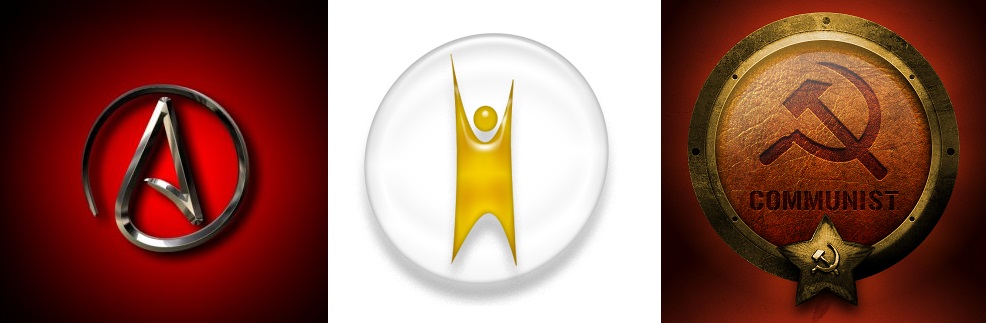
I think there is a certain wisdom to be learned from the Atheist. They clearly see the problems with the fundamental-mindset and lack of open mindedness and prohibition of doubt and skepticism present within some of the world's great religions. (They also, often in error, assume these are necessary prerequisites for the religions).


Hinduism, Buddhism, the Chinese-syncretism (Taoism, Confucianism,Buddhism), Judaism, Christianity, and Islam; the great religions of the Axial Age.


No great new religion has swept into world prominence since Islam some 1300 years ago. Does this mean that the foregoing list completes the roll call of living religions? Yes, and no.”

If we accept Emergence Theory, the existence of cultures and religions are a fluid and evolving thing. It may occur in leaps and bounds and the Axial Age may very well have been a leap or bound, but it cannot be the final word. It cannot be the final step. What will be the next step in their – or indeed, our – evolution?

Through the centuries men have died for the right to believe, but other men equally sincere have died for the right to disbelieve. However we may rate their wisdom, we must credit them with a kind of religious fervor in defense of their faith. For atheism too is a faith, in the sense that it is based on belief rather than scientific proof.

In its narrowest sense the term atheist means one who denies the existence of any and all gods. But it has come to apply to those, including skeptics  materialists and positivists, who do not acknowledge that the world was created by a being or beings of incomprehensibly magnified human intelligence and form, and also an uncounted number of people the world over who would consider that they fit the word's broader implications.

Since pure atheism and agnosticism obviously do nothing towards answering the ultimate riddle of life, some nonbelievers have turned to humanism – a term which has had many varying meanings, but which today, according to Corliss Lamont in Humanism as a Philosophy, “is the viewpoint that men have but one life to lead and should make the most of it in terms of creative work and happiness; that human happiness is its own justification and requires no sanction or support from supernatural sources; that in any case the supernatural, usually conceived of in the form of heavenly gods or immortal heavens, does not exist; and that human beings, using their own intelligence and cooperating liberally with one another, can build an enduring citadel of peace and beauty upon this earth.

And finally there has emerged in contemporary history another great power over men's minds and acts – indeed, a faith – which is at once the denial of all religion and the most potent expression of secular religion ever to challenge the other faiths... Communism.” The World Great Religions, Time Incorporated, New York, 1957, pg. 8

Does our modern age contain within itself a New Axial Age?

I don't see issues with Atheism as an alternative Belief-System, but we have seen the rise of Atheist-fundamentalism, and I do see issues with this 'flavour'. It is the last thing we need.

We also have seen the birth of Humanism (and it's darker brother, Communism).

I think another hallmark of our potential modern Axial Age is a sort of pluralism, or syncretism of faiths. And this gives me hope. I think it's important that we acknowledge and identify their existences. Yes, we have historically seen syncretism in the past, with the Romans and much of Hindu's numerous millennial spanning life is a testament to syncretism. But what is unique today is that we exist in a global society – we live in a much smaller world.
The option of a fundamentalist position now,can only lead to Empire or destruction. And isolationism is no longer an option.

In the New Axial Age, can Pluralism, the New Religions of Atheism, Scientism, Communism, and Humanism (in their various forms) find their place in an ever shrinking global community?
Will they sow the seeds of conflict and destruction? Will they become akin to the religions they so hate by competing for power, human resources, and authority?

Or could these be the tools we need to navigate into this new world?
Personally, I'd like to believe in the latter.

Thursday, May 2, 2013

"Cross Examined" by Bob Seidensticker: Commentary and Review

(By Guest Writer - Michel Weatherall)

Although I do believe there often times is truth in fiction, books like this can prove to be tricky, considering the author – Bob Seidensticken – is an Atheist and supporting the atheist world-view. There isn't anything wrong with this position. I just think it's important to identify this up front.

From a writing point of view there were a few surprising twists in the plot, but at other points, what I would have expect to be more climatic, were glossed over, almost removed to the realm of a footnote. Overall I enjoyed this novel. It captured my interest and held it. The characters were real and I could genuinely care for them.

At some points there seemed to be the theme that Science and Religion cannot mix, yet at other points almost the suggestion that the two are in need of one another.

Although many, if not all, the atheist arguments against Christianity in this book hold water, they are presented nearly exclusively as an argument against Christianity. They might be better served against religiosity instead. At times there seems to be an axe to grind, which concerns me, because if this is true, this form of Atheism is little more than a negative reaction.

I have come to many of the same conclusions (and arguments) the atheist-camp has regarding Christianity. (One of the reasons why I've moved beyond it). However, that doesn't make me an Atheist, nor does it make the Atheist right nor is Atheism the only answer.

Ultimately this fictitious book is about the very real and clandestine warfare of the human resources of the Faiths.

A large and overarching theme in Cross Examined is that of Apologetics (defending one's faith) and debate: the art of debate. Winning a debate does not necessarily mean being right nor finding the truth.

Too often times I have watched debates and it is more like a sparring match with either opponent showing off their debating talents and skills. However, I have found that one's skill at debate and the truth are not necessarily synonymous. We see this echoed by Jim Emerson on pg. 207:

"...let me stress one thing. Your primary goal in any discussion or even a debate must not be to win or even to defend your position. It must be to find the truth”.

I have seen individuals clearly win a debate but actually be wrong. They simply had better debating skills. I think sometimes a little bit too much emphasis is put onto the illusion of truth within Apologetics and Debates. They are not that decisive when it comes to the truth; they are more informative. It shouldn't be about winning. But I think this book addresses this issue in its subtle and elusive way.

Ultimately, I believe there is truth and wisdom within many of the world's many Belief-Systems, including Atheism and this book has potential for us to have a glimpse of it and learn from it. Never lose a healthy sense of doubt, scepticism, and most especially one's ability and permission to question.

But at points it would seem that Atheism is little more than a self-deluded scientism and at other points there's an acknowledgement that science is not all there is.

Science give us an approximation of the truth, nothing more. Science is built on a body of facts that changes, and that's its strength.” pg. 187
I think one of the most interesting and telling points in this entire book is the San Francisco earthquake of 1906 itself. Obviously it is the catalyst for this novel, but it is so much more.
If we look at Reverent Samuel Hargrove (Evangelical Christianity) , Father Mordegreen (Roman Catholicism), Jim Emerson (Atheism), and Abbot Tanaka (Buddhism) and what they did in relation to the earthquake, we begin to see interesting truths in their varied orthopraxies – and action speaks louder than any statement of belief.
Hargrove (Evangelical Christianity) sees it coming, but does little to nothing to help the people avoid it nor offers succour after it strikes. Quite the opposite in fact! He monopolizes the situation and attempts to turn the events to his favour and benefit. (Expand his church, more members, more donations, more money, larger church building, more personal fame) – practices of a corrupt religion.
Father Mondegreen, attempts to offer relief in the only way he knows how; by holding Mass (pg. 95) – by ritual – regardless of its success or failure – practising a rote religion.
Jim Emerson, the protagonist's mentor, as we later find out, is quite rich. What does he do in regards to the earthquake? Well, very little at all. He continues with his own fears and activities and hobbies and interests and obsessions. In fact, his actions would seem to reflect a mechanistic-materialistic atheism; a belief-system without a soul, or compassion. The earthquake is little more than a scientific fact or a news story. It happens. People suffer. People die. Oh well. There's an emotional detachment and even indifference.
And finally there's one of my favourite characters – The Buddhist Abbot Tanaka – Thena's mentor. What does he do in regards to the earthquake? He takes all the survivors the monastery can handle in, and then takes more. My favourite line is “We share what we have. If we don't have enough, we will be hungry with our neighbors”. (pg. 76)
I think Tanaka represents Humanism but with a spiritual edge.
We see the absolute immoral corruption organized and institutional religions can become with Hargrove. We see the mindlessness and rote obedience religion can be with Mordegreen. We see the emotional detachment and soulless emptiness certain forms of Atheism can become. But it is only with Tanaka do we find a harmonized balance.
I've heard an analogy of humanity's search for truth being like a 3-legged stool. Its legs being Science, Philosophy, and Spirituality. The simple fact that there are 'areas' where science cannot (and should not) function, is important.
This is echoed by Paul's old friend, Virgil near the end.
...it seems to me that using logic to take care of your spiritual needs is like slicing bread with a hammer”. (pg. 261)
At the end of the day, this book is ripe for discussion and debate. On an individual level or reading, if nothing else, it should make the reader aware of how sound – or unsound – their beliefs are. This book should prove a healthy read for Christians because it will shake them out of their cloistered, bobble-head (group-think) safety, should they be suffering from it.
I would love to see this book presented for study alongside the Alpha Course Manuel. I think it would keep everyone honest and sober.

~  ~  ~

Great Wisdom: Quotes Worth Remembering:
Your primary goal in any discussion or even a debate must not be to win or even to defend your position. It must be to find the truth.” Jim Emerson, pg. 207


Let me tell you a story. In some parts of Asia, hunters build an unusual monkey trap. They hollow out a coconut and tie it to the ground, then they put rice in the coconut. The monkey can reach in through a hole and grab the rice, but the hole is carefully cut so that it is big enough for the monkey's empty hand to go in but too small for his fist to come out, full of rice. When the hunters come, the monkey refuses to release the rice, and he is stuck. He traps himself... Preconceptions are like the rice. They are attractive, but we must let go to find the truth”. Abbot Tanaka, pg. 99


Well, you're the philosopher, but seems to me that using logic to take care of your spiritual needs is like slicing bread with a hammer”. Virgil, pg. 261


Disclosure of Material Connection: I received this book free from the author and/or publisher through the Speakeasy blogging book review network  I was not required to write a positive review. The opinions I have expressed are my own. I am disclosing this in accordance with the Federal Trade Commission's 16 CFR, Part 255.

Saturday, April 27, 2013

The Cleansing

(Continued from Alcohol Substitute)
Relationships come and go. Sometimes we move and they fade away into past memories. Others abruptly end due to irreconcilable differences or conflict. Some relationships last a lifetime and are mutually supportive, constructive, fun, and loving. And some linger on - possible due to some elusive and ill founded sense of duty or obligation. These tend to be long-lived. These tend to be insidious because they can become so commonplace that we become blind to their damages and potential toxicity.

These are the ones my wife and I took a long hard look at and abandoned, primarily because of our children and our own sanity. It was this period of time that I have come to call The Cleansing.

It was a long process of learning, being used, and realization - years, possibly even decades - in its formation. But it was within the last 8 years that this cleansing of relationships reaching its full fruition. I cannot give a specific time or date when this occurred. It wasn't a spontaneous  single incident; it wasn't a sudden purge. These relationships didn't just end. We had suspected for years that they were one-way streets. We simply "withdrew" and watched. And since we were the only ones feeding them, they slowly withered, starved, and died. It was actually a very passive act. More inaction than action. No going out with a bang, but a forgettable whimper.

There are times now when I feel fully convinced and content that it is done and over; that we have successfully purged these non-reciprocal or toxic relations and personalities out of our lives. But there are other times when I feel that it is not done, that the task is not yet complete or final.

It is clear to me, through incidental and sporadic chance encounters of information, that some of these people have not found closure or understanding or acceptance of this "cleansing". I wonder if the fault lies within myself for not having a bold enough confrontation on these issues. Other times I wonder if the reason they struggle is indicative of the self-serving causes that ultimately led to these circumstances. That they cannot see or cannot understand because they cannot, or will not, look at themselves. Lost in their delusions and denial.

I am well aware, that behind my back, I am still the bad-guy. This isn't new. In the now distant past they had solidified their relationships among themselves based upon this common 'enemy'- me. Why should it be different now? No, things on their end haven't changed. But when they can no longer make me their bad-guy, their scapegoat, they are left with nothing more than their empty victim-hood.
And that is why they fail to see. They can no longer understand what it means to be a victim, because they aren't one.

Do I have an obligation to help others of their illnesses, especially people I have chosen - with reason - to abandon?

They still live in their lies and deceits and illusions... they continue to poison themselves; instead of growing, they spin in circles, attempting to influence and poison any and all who will listen with the one thing that cannot be challenged; their perpetual state of victim-hood.

I must make it clear that I do not feel anger towards these people. I do not feel hurt, or resentment, or even disappointment anymore. I personally have come to terms with what these past relationships have, and have not, been. I have long since let go of what I might have hoped they might be, or what they should or should not have been. If I feel anything at all, it's pity... but not compassion.

And it is at this point that I become concerned: the lack of Compassion.

I have come to the conclusion (in The Dharma Entanglement) that Compassion is one of 3 elements integral  critical, and necessary for a healthy spiritual life and growth. However, I debate whether Compassion is called for in The Cleansing or not.

There is a difference between Pity and Compassion. I fear a great many people confuse or conveniently exchange the two. I myself, unfortunately, lack that luxury. Pity is sympathizing with someone's pain and suffering (but doing nothing). Compassion is sympathizing with someone's suffer and doing something to help alleviate it.

The question ultimately becomes, who is deserving or worthy of my Compassion?
Although I have spiritually moved beyond Christianity, I have borrowed their concept of Grace:
(Being rewarded or benefiting from something positive when you do not deserve it and have not earned it).
I'd like to believe that's part of my understanding of Compassion.
...or maybe this was the reason why those non-reciprocal and toxic relationships initially lingered of for so long.

Was my tolerance and Compassion their encouragement, their permission?
...or was my Pity the solution?


Saturday, April 20, 2013

"Unique Self" Dialogue with Mike Morrell and Dr. Marc Gafni

I'm not going to be able to thoroughly comment on this entire dialogue. There's a significant amount of information to digest and absorb, so I'll restrict myself to certain points that stood out to me and caught my attention.
But first allow me to comment on how this brief (one hour) conversation affected me personally.
"Emergent Theory necessitates including that within itself which it evolved beyond"
It has been a long time since I have stated (5-1/2 years) that I have moved beyond Christianity, having experienced its - possibly forced - limitations. However, having listened to Mike Morrell an Marc Gafni's conversation has caused me to, at least entertain, rethinking this position. Maybe, as the definition of Emergent Theory states, by moving beyond, by spiritually evolving beyond Christianity, I have not abandoned it, but absorbed it. Maybe it is still within me, but I have forgotten. Maybe it is something I would be wise to reflect upon and remember.

~

I can remember reading John Hick's God Has Many Names and The Metaphor of God Incarnate, he had identified the challenges faced with find some sort of bridge between many of the non-theistic Eastern Traditions and the Abrahamic Faiths.

The comments about Being (from Easter Traditions) and Becoming (from Western Traditions) are clearly symbiotic. Being and Becoming are one another's strength, and this could very well be that elusive 'bridge' between the non-theistic and theistic traditions.

~

When Mike Morrell has asked, how do we engage in 'my unique self', the first point Marc Gafni suggests is that we need to read - that the art of reading was lost.

I don't believe Marc could be more correct.

Many years ago, when I was still affiliated with a church, I had did a survey regarding how much people in general read. The question was simple. Not including memos, emails, traffic signs, short texts, anything required for work, newspapers or magazine articles, how many books do you read in a year?
I asked 100 various people I knew in my community (admittedly, not the best size group for a survey, but I was only one person). I suspected the numbers would be low, but I didn't expect what I encountered.

86% said they read between 0 to 1 book a year, and 12% read between 2 to 3 books a year. That's 98% of people read less than 4 books a year.
Clearly, reading is a dying art.

Shortly after, I figured I would do the same survey but this time with church-going Christians only. I figured - due to bible reading - these numbers would be higher, and potentially the art of reading would be alive and well within the church-going Christian community. At least that was my expectations. And once again, reality surprised me.

Slightly over 60% didn't respond at all. To this day I'm still not sure what to think of this. Indifference? Who can say.
The sad truth of the matter is that, like Marc Gafni said, reading is a lost art. One we need to reclaim.
Many people are surprised to hear this. Many people I share this story with initially confuse the ability to read vs. the actual act of reading, believing - I suppose - that being literate is synonymous with reading. They're not the same.

~

The second point Marc Gafni said was to ask oneself 5 questions (And I'll add my initial thoughts about myself as we carry on forward):

  1. What is my unique pleasure? (Bringing abstract and creative ideas and thoughts to fruition).
  2. What are people most naturally dependent upon me for? (To be the voice of reason in a sea of emotional chaos - maybe that's more of a statement about the people around me than of myself?)
  3. What is the unique need that I can address for people within my circle? (Analysis and order)
  4. What is my unique talent?
  5. What is my unique Shadow?

I believe my 'unique talent' and my 'unique Shadow' are one in the same thing.
Imagination.
(And let's make a note of distinction here; man's innate ability of Imagination is not the same as Make-Believe or pretending. Our innately human faculty of imagination - though can be used to make believe and pretend - is also our tool in dealing with abstracts).

It is both my blessing and my curse. My Imagination opens up wonder vistas  and allows to me see the patterns and order of things within the parent chaos. But on the same note, my Imagination gives birth to and feeds energy to my Fear and Worry. My Fear is great.

~

Dr. Marc Gafni said, "We need Christianity"
Christianity needs to evolve itself from within its own tradition. These are extremely powerful words. These are words of hope!

He says that Progressive Christians (Emergent?) must reclaim their moral authority. Not give up, not abandon Christianity, but passionately embrace it.
...I couldn't agree more...
...but how? The current Christian 'moral authority' exists within the Institutional Church.
I have always seen these 'Progressive Christians', like Mike Morrell, or Emergent Christianity as a sort of misfit fringe-dweller. But the very structure, business-like model of the modern day Institutionalize Church carries the entire moral authority. It is built (man-made?) that way. It's not just that these fringe-dwellers  are not yet a majority - or at least at that magical 'tipping-point' number - but by their very definition are not centralized; cannot be centralized; I doubt can every become centralized within becoming yet another denomination or splinter group.

~

This dialogue was extremely engaging and has piqued my attention unlike it has been piqued in quite some time.
I anxiously look forward to getting a copy and reviewing Dr. Marc Gafni's Your Unique Self from Mike Morrell's Speakeasy.


Coming soon,
"Your Unique Self" by Dr. Marc Gafni, Commentary and Review

Friday, April 19, 2013

Ned Flanders

Contrary to some opinions, I think the character Ned Flanders makes an extremely poor Christian on The Simpsons

Ned Flanders is more concerned with his own spiritual "safety", "well-being", and "cleanliness". He has no common ground with the other Simpson characters and thus cannot relate (nor even reach out) to them. I think Ned Flanders would be well to sit in Moe's Tavern and have a beer with Homer and Barney... but he never does! 

Ned Flanders is a spiritual hedonist. He is afraid to get his hands dirty with the "common rabble".

The Ned Flanders is more concerned with a “them-and-us” type of perspective - the clean and the unclean - the worldly and the godly – the secular and the sacred.

I think many churches and Christians need a sobering reality check. 
(If we look at some biblical examples of "heroes of faith" in minute detail, we may be surprised. Rahab (Joshua 2:1-7) was an adulterous prostitute and there is no indication she changed her ways after she saved the Israelite spies).

But there are some who do not make these Ned Flanders’ distinctions. They are not afraid to associate with sinners. They are not afraid of swearing. They are not afraid of getting their hands dirty. These are the ones who will regularly walk into Moe’s Tavern and will have a beer with Homer and Barney.  

Saturday, April 13, 2013

Two Stories: Two Powerful Men

The first job in my trade was in a small Lebanese shop ran by a man named Abdullah.
He had a wife, and young daughter, and a very young son. I remember them because they very often dropped by the shop for one reason or another.

I had worked there for four and a half years and it was only near the end of this time that I heard the story as to why Abdullah left Lebanon.
He has a previous wife and children. They were all killed in Lebanon during its civil war(1975-1990).
I learned little more details than that and I had no intention to push the subject.
The point that struck me the most was something Abdullah said.

Although I cannot remember verbatim, I most definitely remember the gist. He said that he had to leave and to let them go. To stay would mean to embrace the hatred; to retaliate; to exact revenge. That it would have led to path of hatred; a never-ending cycle.

He chose to abandon his hatred.

I fear this may be an aspect of the continuing conflicts within the middle east, but my point isn't one on politics or the Middle East. The bravery and wisdom of this statement has always stayed with me.
It has always influenced me. I have always attempted to look within myself throughout my life, in hopes of being able to see when and if I am influenced and blinded by hatred. And hopefully have the bravery and wisdom to let it go; to know when to simply walk away. I know in my past I have had struggles with anger and rage, and these things are feed by hatred, and simply walking away can be an inconceivable notion in those blind, raging, dark moments.

~

When my grandfather (on my father's side) was a young man and in the Canadian Army, he met and had a romantic affair or encounter with an English clearing woman before the Second World War.
Details are sketchy. (Both my grandfather and this woman are long since deceased). We don't know whether it was a 'one night stand' or a relationship. I cannot remember whether the woman was a cleaner or nanny.... but these details are of little importance for this story.

Pregnant out of wedlock, especially in the late 1920's, was a taboo, so she was unceremoniously 'shipped' out of Canada and returned to England. My grandfather was clearly aware but seemingly indifferent to the situation. They never seen one another again (nor the child).

In England, the woman gave the child up to a Navy run orphanage, and that was where the child was raised and when he entered and remained in the British Navy. That child would be my long lost uncle Jack.

He grew up in the orphanage and Navy. He made a career in the Navy being a diver (using the diver bell suits). Deactivate mines was what he did.
During the Second World War he would keep track of where various ships were sank, and after the war ended, he would open a salvage company, return to the sites, and salvage the wrecks.

By the time he retired, he sold the company for millions of Pounds, bought a small estate, and lives happily. His wife (my aunt) is a retired model and he has three beautiful daughters, all of which are married with children of their own. It was at this point when we discovered what would amount to my 'long lost uncle'. It was like discovering and having a third side of the family.

The last time we visited him there was a black and white framed photo in his dinning room. It was shocking how much it looked like my son. If I didn't know better I would have sworn it was my son! My wife and I commented on it and Jack told us, “Ah, yes! I can remember the day that picture was taken. It was the day I was dropped off at the orphanage.”

Silence reigned.

My uncle Jack is a wonderful man. He is full of life and one of the most positive people I know.
How we choose to live our lives are really our choices. We all have stories we could tell about how difficult it is to be us. How much injustice or pain or unfairness we have had to endure. I can all tell a story about how hard it is to be me. We all have our dark moments and histories.

Or, I can choose to see the brighter side of things.
Ultimately, we are not victims. We choose how we live our lives. It is not a matter of the hand we are dealt, but how we choose to play that hand. I leaned this lesson from my uncle.

If there is anyone that I know who would have justified reason to be cynical and bitter with the injustices of life, my uncle is that man. Abandoned by his father for reasons of society... abandoned by his mother... raised in an orphanage....I mean no comedy in this, but this could be the beginning of a Charles Dickens' novel. He had every reason to hate the world we live in. Every reason to feel sorry for himself; to be bitter, angry, cynical.

But he chose not to.

I wish I could type these words with more power. He chose not to. He chose not to be the victim, but to grab life, drink of it fully, love life and the world.... it touches me still to write this. It still chokes me up. I honestly don't think I have come across such a display of 'power' as this.

My uncle is a wonderful man. The lesson I take from him was taught passively, simply by his example.
I will not feel sorry for myself.
I will not be the victim.

~

I don't believe I could endure what these men have endured. (And I am thankful I have not had to).
I do not use them an examples to myself to remind me on days that I am down of how bad things could be. No, they have more value to me than a simple tool. 
They are inspirations!
They are exemplars, teachers of how life is to be lived!
Do not carry that darkness within you.
Play the hand you're dealt. Always see the positive. Learn from the negative and move on.

These are two wonderful and powerful men.